
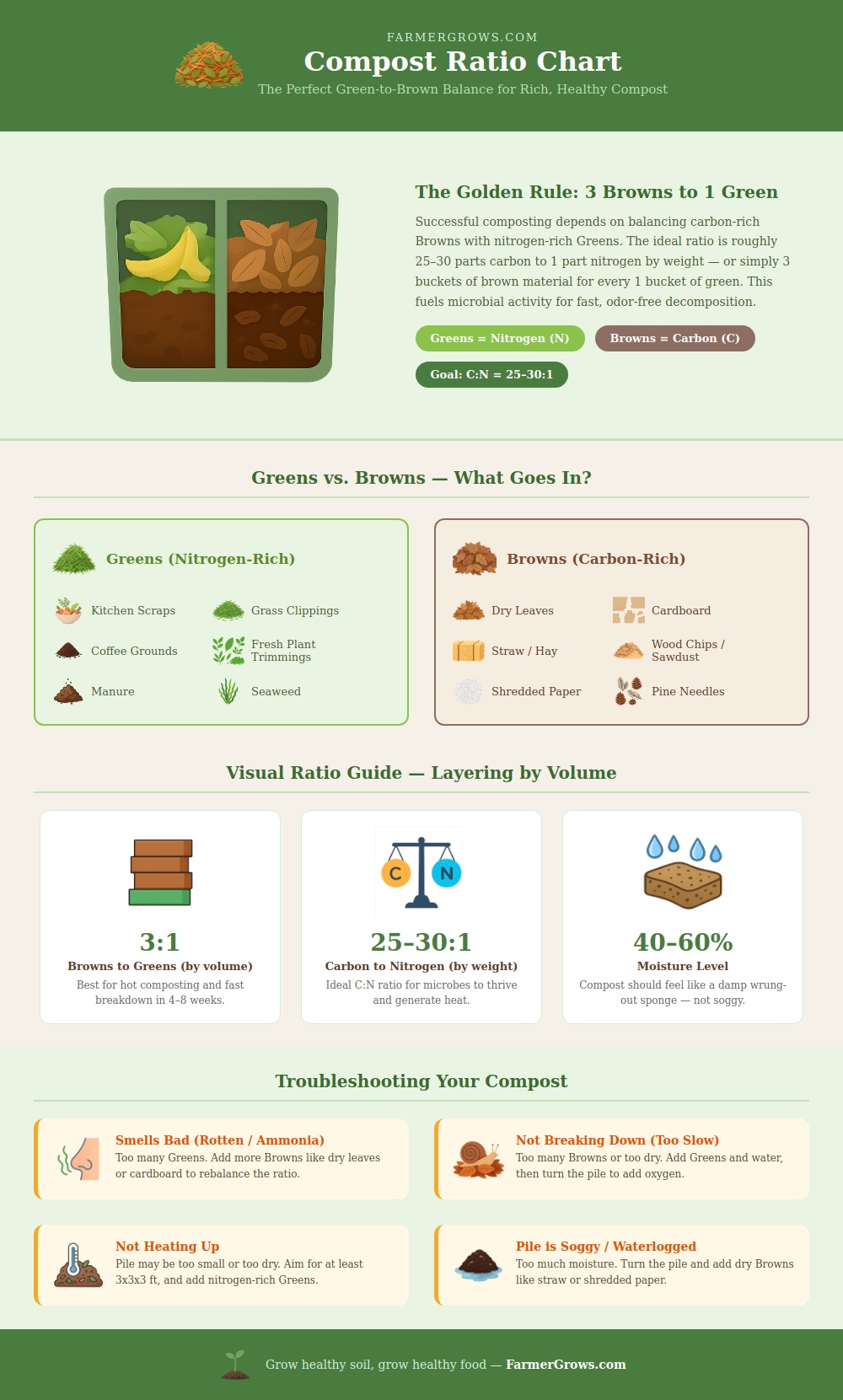
Getting the right ratio of carbon to nitrogen is one of the most important reasons for making good compost. You can consider that the ideal proportions for compost are around 25 to 30 parts carbon for every part nitrogen by weight. Scientists found that to quickly produce nutritious compost with pleasant smell, you must keep that C:N-ratio in approximately 25-30:1.
The microorganisms in the compost use carbon as energy and nitrogen for protein processes, so a ratio of around 30 parts carbon to 1 part nitrogen works best for bacteria.
Right Carbon to Nitrogen Mix for Compost
When you pile the materials like this so that heat stays trapped, that ratio helps heat-loving germs that love the heat thrive. How fast the piles warm up depends on the carbon and nitrogen ratio. Too much nitrogen can make the compost too hot, kill microorganisms or cause anaerobic process with bad smell.
Now here the thing. For home compost it is not possible to count exact atoms. Practically you measure volumes of brown materials against green.
Green materials are nitrogen-rich, as food waste and grass clippings. Brown are dry, wooden, carbon-heavy, as twigs and leaves. For good ratio mix one part green with three parts brown.
Various books mention two to five parts brown for one green, always by volume. Good starting ratios are 4:1 brown to green, and later you adjust according to the needs of the pile.
Some simply mix half brown and half green. You commonly mention also 50-50 ratio. It does not need to be perfect.
Without good mix of brown and green, the pile will not warm or will break down very slowly.
You can simply estimate the ratio by eye, and it works for most cases. If the pile too wet or too dry, adjusting the ratio helps. It does not want to always be perfect.
Composting should be easy, no time burden. Note that the 30:1 ratio deals with dry weight, not volume. Falling leaves have more carbon than nitrogen, so mix them with fresh grass clippings to reach what is like 30:1.
If many kitchen waste enters in the system compared to the rest, add more yard wastes as dried leaves or cut newspapers to improve the carbon-nitrogen ratio. The optimum mix is around 70% carbon materials as leaves, wooden bits and nutshell pieces with 30% nitrogen as vegetable waste, coffee grounds and manure. Most organic materials will become compost in one to twelve months, depending on how well you follow those basics.