
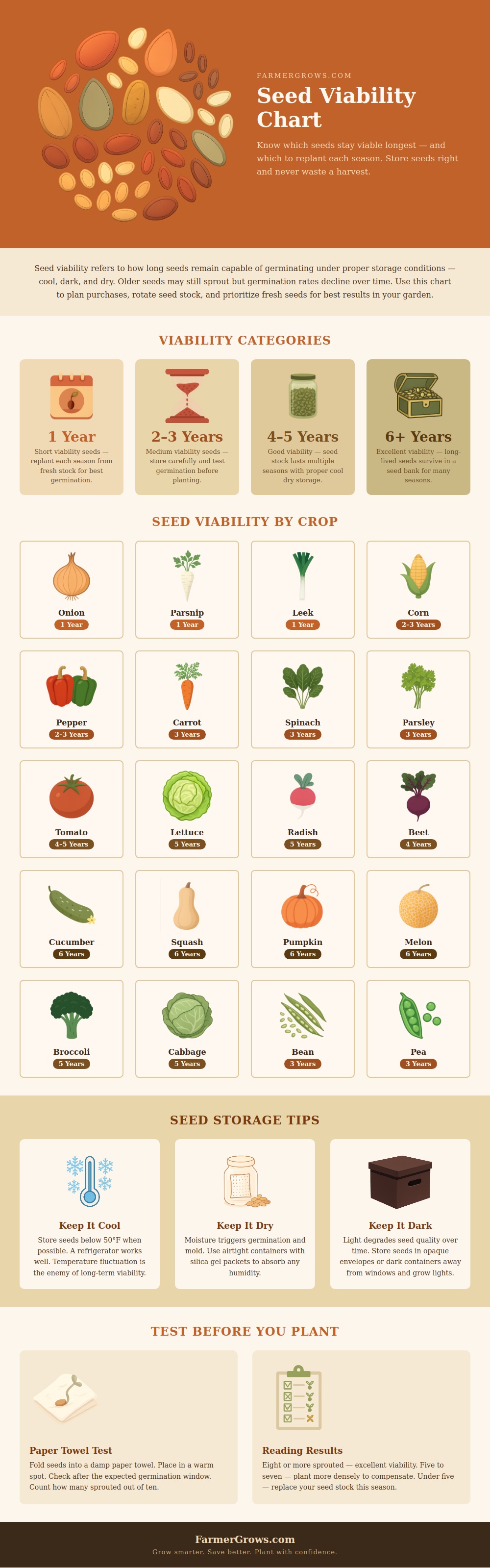
The skill of seeds to germinate and grow in healthy plants depends on their viability. Most seeds have a limited lifetime, and their viability drops over time. You call viable that seed that can germinate under right conditions of humidity, temperature and light Seeds that are not viable are dead and of no use.
Some seeds stay viable for years, while others last only a short period. For instance, seeds of parsley and onion last only one or two years, while those of watermelon and cabbage can last four years or more. Parsnip seeds have the bad luck to stay apt only one year, maybe two.
How Long Seeds Stay Alive and How to Store Them
After the third year, no matter how you preserve them, the viability falls under 10%. Pepper seeds preserve their skill very well. For instance, pepper and tomato seeds, kept in glass jars in the refrigerator, germinated after 14 years.
Lettuce seeds last 1 until 5 years.
Many books say that seeds stay viable only one year, but that advice is a bit too carefull. Actually, most seeds last years. Some species stay apt so long that you do not know the real limit.
Humidity, temperature and oxygen proportion are main environmental factors that cause seed deterioration and loss of viability. To preserve seeds, you should keep them cool, dry and away from sunshine. A simple rule says that the sum of temperature in degrees Fahrenheit and relative humidity in percentages should not pass 100.
Reducing humidity in seeds of most species extend their life noticeably for almost 90% of them. Store seeds in a cool place like a refrigerator will certainly extend their use.
Some companies offer special services for seed storage. They use separate rooms that are protected against rodents, well fanned and occasionally equipped with industrial driers.
Fresh seeds germinate best. Packets show a date until when you should use them, but usually seeds stay viable longer. Good conservation matters for their future skill, specially when you buy fresh.
Testing the viability is simple. Lay seeds between a wet white paper towel, fold it over them, enclose in a plastic packet for sandwiches and keep it moist and warm for some days. Use around 30 until 50 seeds for a good rating.
Check how much time normally must pass for germination, and wait past that period. The amount of germinating seeds shows the percentage of viable. If it is around 70% or less, plant more seeds.
Under 50%, it will be good to buy new.
For some crops, seeds two or three years old can adapt better and return more quickly after stress than fresh from last harvest. The biggest seeds in fruit germinate and grow strongest, because they carry more foodin them.